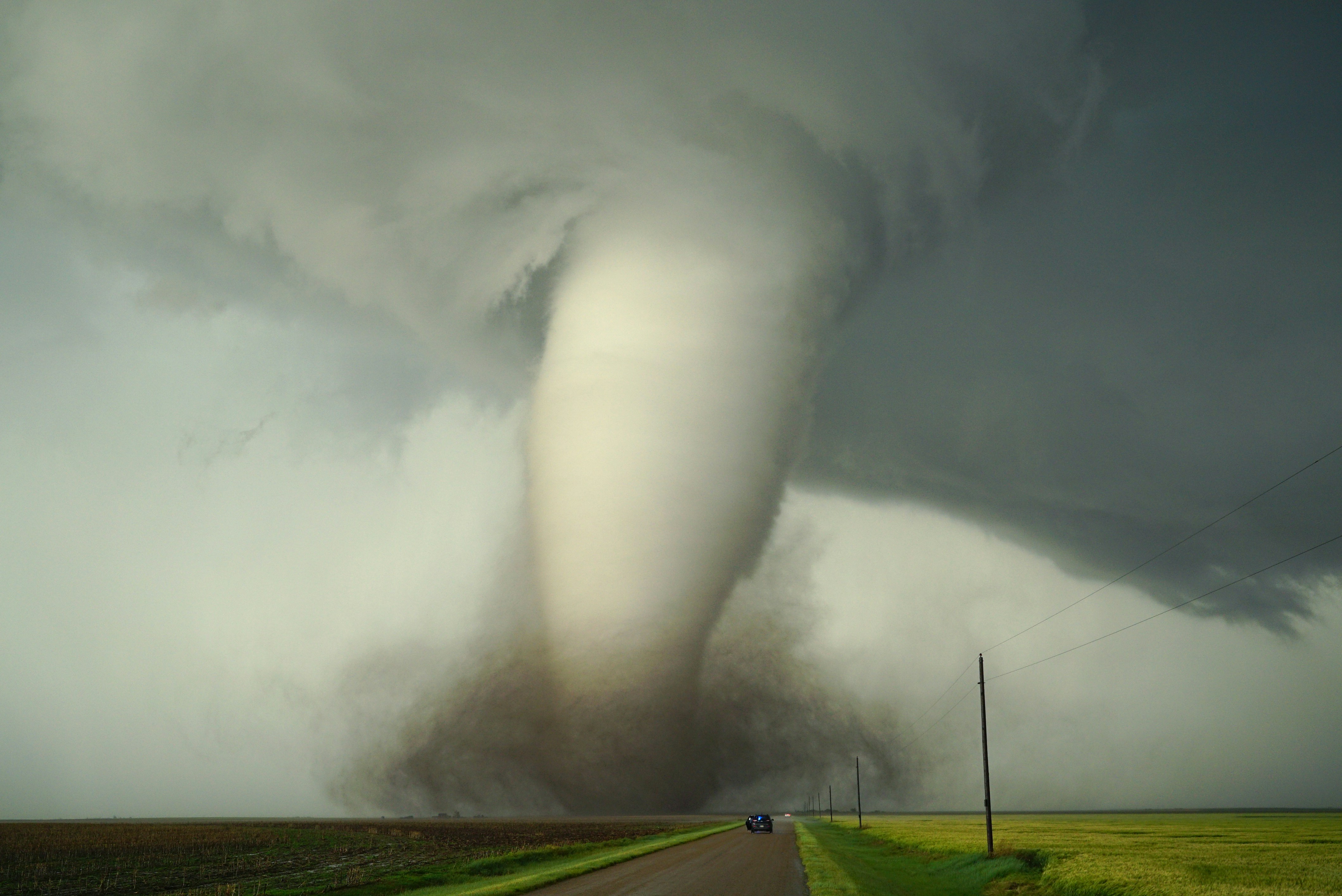
What is a Tornado?
Acording to the National Weather Service, A tornado is a violently rotating column of air extending from the base of a thunderstorm down to the ground. Tornadoes are capable of completely destroying well-made structures, uprooting trees, and hurling objects through the air like deadly missiles. Tornadoes can occur at any time, day or night, anytime of the year. Although tornadoes are most common in the Central Plains and the southeastern United States, they have been reported in all 50 states.
Tornado Safety
It is important to note that tornadoes are very violent and the strongest of tornadoes can tear apart a town in a matter of minutes. Tornadoes can also occur with little to no warning so it is crucial you take cover immediately to protect yourself. Below are some more tips to help keep you safe during a tornado.
-
-
Keep an eye on the weather and keep up to date with the latest forecasts. A good starting place would be your local news, local NWS forecast office (you can find a list by clicking
hereor by visiting the Storm Predication Center website by clicking
here. -
Have an emergency plan for you and your family. know where to go in your home, at work, and/or school. If you live in a mobile home, plan to have a safe building to go to such as a church or local family member. Talk to your kids and practice your plan so you know what to do when severe weather strikes.
Abandon mobile homes and campers immediately! These provide virtually no shelter or safety during a tornado.
-
If at work or school, avoid large rooms such as caefeterias, gyms, or auditoriums.
-
Go into a basement or storm shelter and don't forget your pets! Try to get underneath something such as a workbench, table, or staircase. If no basement or storm shelter is available, go to the lowest level of your home or business in an interior room or bathroom without windows.
-
Do not open windows or doors, this is a myth! Go to your storm shelter immeidately.
-
Most deaths from tornadoes occur from flying debris. Make sure to keep a mattress or blankets in your shelter to cover yourself.
-
Crouch down as low as possible facing the floor and use your hands, a matress, or blankets to protect your head.
-
If Trapped outside get as far away from trees and cars as possible, lie flat on the ground with your face down, and use your hands to protect the back of your head.
-
If in a vehicle, do not seek shelter in an underpass. If there is no safe area or you are caught without time to seek shelter, keep your seatbelt on and put your head below the windows. Use a jacket or blanket to cover your head.
-
Stay away from windows. Strong winds or hail can cause them to break.
-
After the storm, keep an eye on the weather as more storms may occur. Avoid downed power lines, damaged buildings, and help neighbors.
Tornado Watches and Warnings
-
Tornado Watch: Be Prepared! Tornadoes are possible in and near the watch area. Review and discuss your emergency plans, take inventory of your supplies and check your safe room. Be ready to act quickly if a warning is issued or you suspect a tornado is approaching. Acting early helps to save lives! Watches are issued by the Storm Prediction Center for counties where tornadoes may occur. The watch area is typically large, covering numerous counties or even states.
-
Tornado Warning: Take Action! A tornado has been sighted or indicated by weather radar. There is imminent danger to life and property. Move to an interior room on the lowest floor of a sturdy building. Avoid windows. If in a mobile home, a vehicle, or outdoors, move to the closest substantial shelter and protect yourself from flying debris. Warnings are issued by your local forecast office. Warnings typically encompass a much smaller area (around the size of a city or small county) that may be impacted by a tornado identified by a forecaster on radar or by a trained spotter/law enforcement who is watching the storm.
-
Tornado Emergency: Seek Shelter Immediately! A tornado emergency is the National Weather Service’s highest alert level. It is issued when a violent tornado has touched down in the watch area. There is a severe threat to human life and property, with catastrophic damage confirmed. Immediately seek refuge in the safest location possible. Call friends and family who are within the watch area to ensure they are aware of the situation. If you see a tornado approaching, do not attempt to outrun it in a vehicle; shelter in place. Once safe, be sure to monitor your local forecast for the latest updates.
Tornado Facts
-
They can strike quickly with little to no warning.
-
They could be almost transparent before debris and dust are picked up by them.
-
Although tornadoes can move in any direction, they mostly move Southwest to Northeast.
-
The average speed of a tornado is 30 M.P.H. although they can be stationary or move up to 70 M.P.H.
-
A waterspout is a tornado that has formed over water.
-
Most tornadoes occur between 3PM and 9PM (but can ocur anytime.)
-
About 1,200 tornadoes hit the U.S. yearly.
-
Lightning is hotter than the suraface of the sun, reaching temperatures around 50,000!