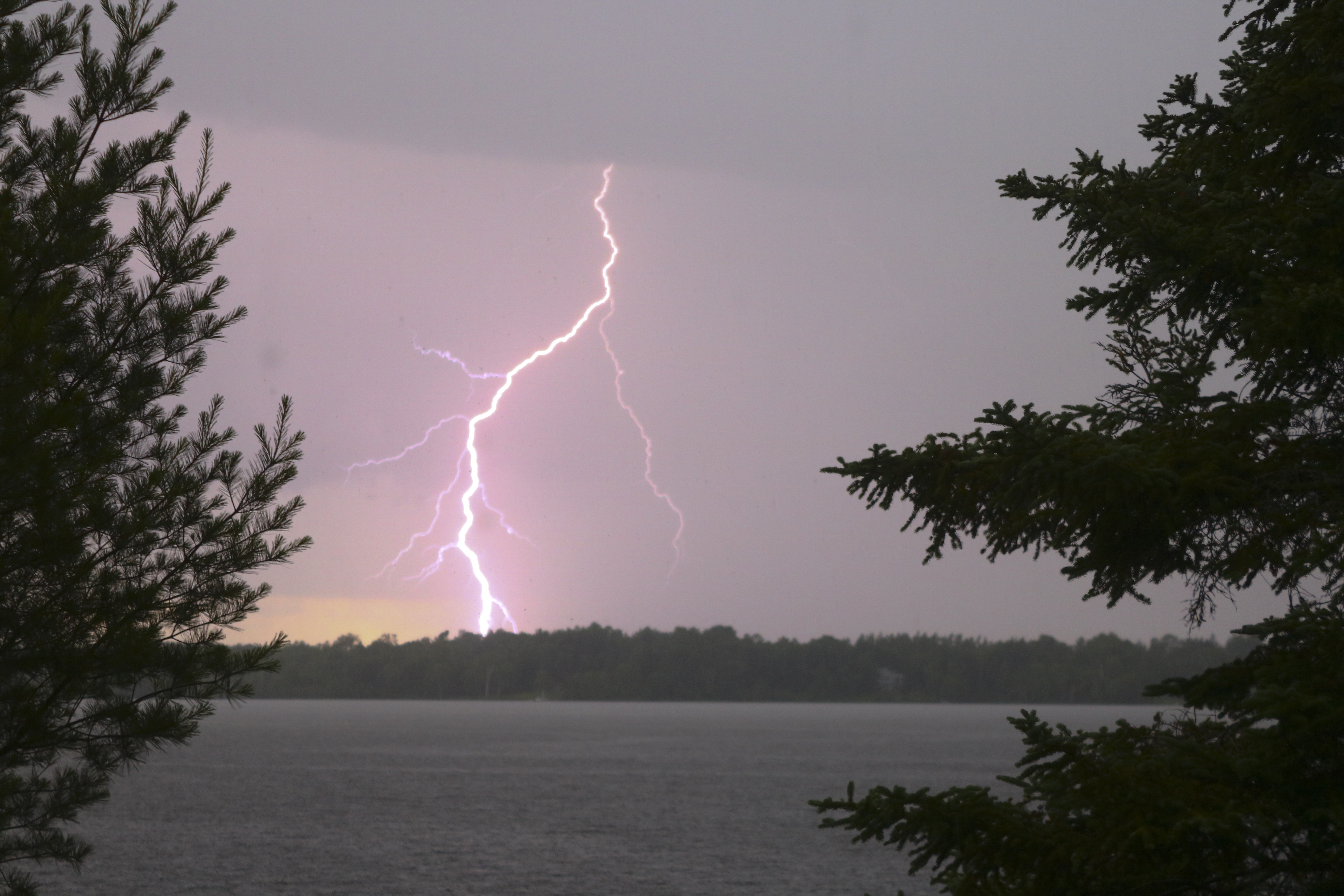
What is Lightning?
According to the National Severe Storms Laboratory, lightning is a "giant spark of electricity in the atmosphere between clouds, the air, or the ground." There are two types of lightning: Cloud to ground and cloud to cloud (also known as heat lightning). According to NOAA's National Weather Service, lighting usually strikes within 3 miles of the center of a storm, but stronger bolts can strike 10-15 miles away. Although it may be blue skies and sunny, because it can travel so far, it is important to go indoors immediately.
Lightning Safety
Lighting occurs whenever there is thunder. Be sure to always go indoors during thunderstorms. Below are some more safety tips to protect yourself from lightning.
-
Keep an eye on the weather during outdoor activities. When thunder roars, go indoors immediately.
-
If caught in a car, make sure to have windows up and do not touch metal surfaces.
-
Do not use any plumbing such as sinks or showers.
-
Unplug electronics before the storm. If there is already lightning, it increases your shock risk to unplug devices.
-
Do not use corded phones or other wired electronic devices.
-
If caught outside, do not stand in open areas or by isolated tall objects. You do not want to be the tallest object in an open area.
-
Do not lie on or lean on concrete as it can contain metal which can conduct lightning.
-
Stay away from windows and doors.
-
Stay within the shelter for at least 30 minutes after the storm has passed.
-
If caught outside without shelter:
-
Stay away from ponds, streams, lakes, and other bodies of water.
-
Move off of higher ground such as hills and platforms.
-
Never take shelter under an isolated tree.
-
Do not lay flat on the ground.
-
Stay away from items that conduct electricity such as metal fencing and windmills.
Lightning Facts:
-
Lightning often strikes outside of the heavy rainfall area can strike up to 10 miles away from the storm.
-
Heat lightning is lightning that occurs too far away for thunder to be heard.
-
Your chances of getting struck by lightning are 1 in 600,000. These can be reduced by taking precautions when thunderstorms approach.
-
Lightning strike victims do not carry an electrical charge and should be helped immediately.
-
Contrary to the myth, lightning often strikes the same place twice.
-
Lying flat on the ground increases your chance of being affected by ground current. Keep moving towards a safe shelter!
References and More Information:
Lightning Safety Tips and Resources (weather.gov)
Thunderstorm and Lightning Safety (ready.gov)
Lightning Safety (noaa.gov)
Severe Weather 101 - Lightning (nssl.noaa.gov)
Is it True You Should Unplug Your Electronics Before a Thunderstorm? (consumerreports.org)
Website template Copyright © 2020 Template by Inovatik
Site content Copyright © 2026 McHenry County Storm Trackers